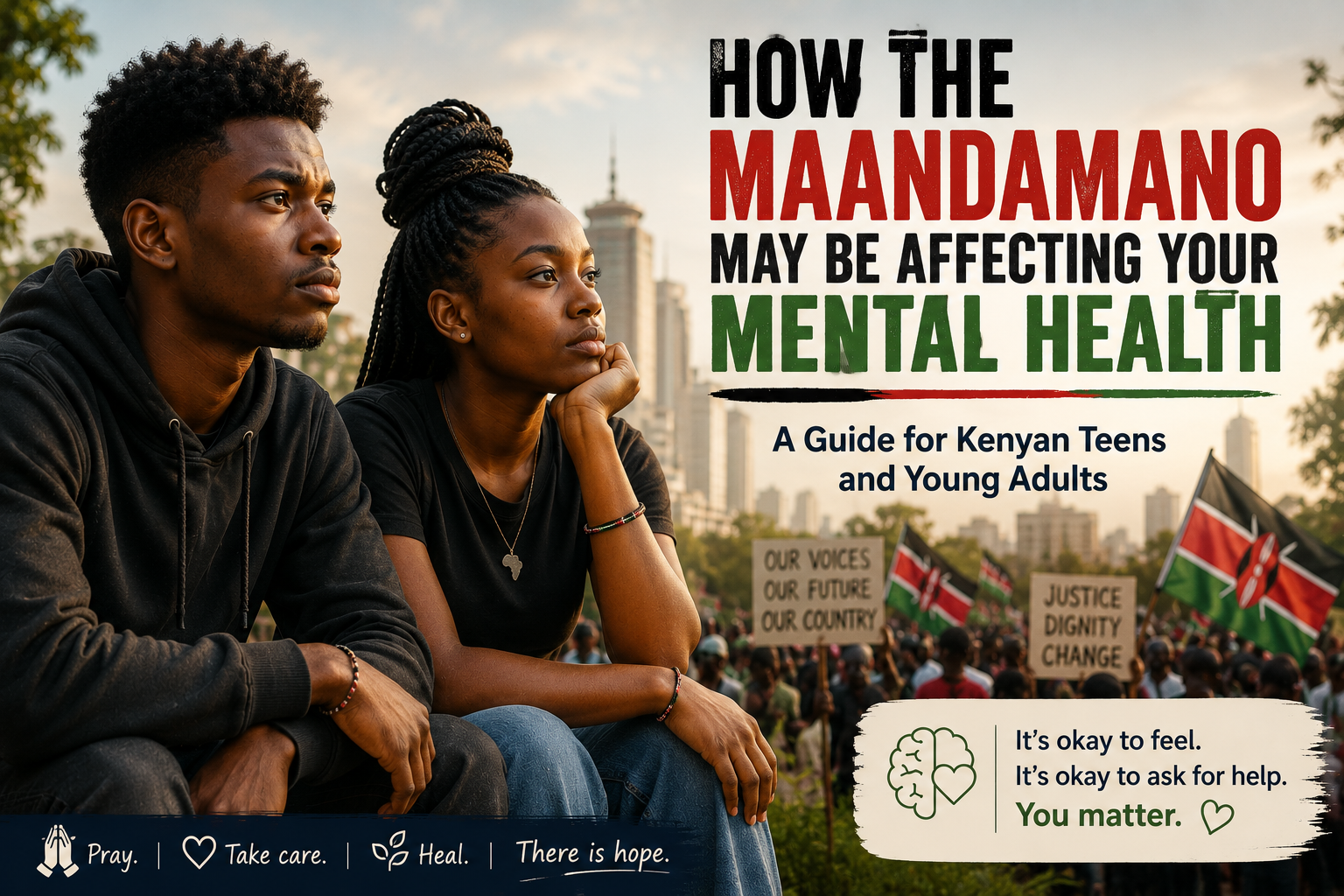
Over the past months, many young Kenyans have witnessed or experienced events that have been emotionally overwhelming.
Some have joined demonstrations, others have watched from home through social media, while some have worried about friends or family members caught up in the unrest.
Regardless of where you were, these experiences can leave a lasting emotional impact.
You may have found yourself feeling angry one day, hopeful the next, or simply exhausted by everything happening around you.
There is no single correct way to respond to difficult national events because every person’s experiences, personality, and circumstances are different.
This article is here to help you understand what may be happening in your mind and body, and to offer practical ways to care for your mental health as you process these experiences.
There Is No “Right” Way to Feel
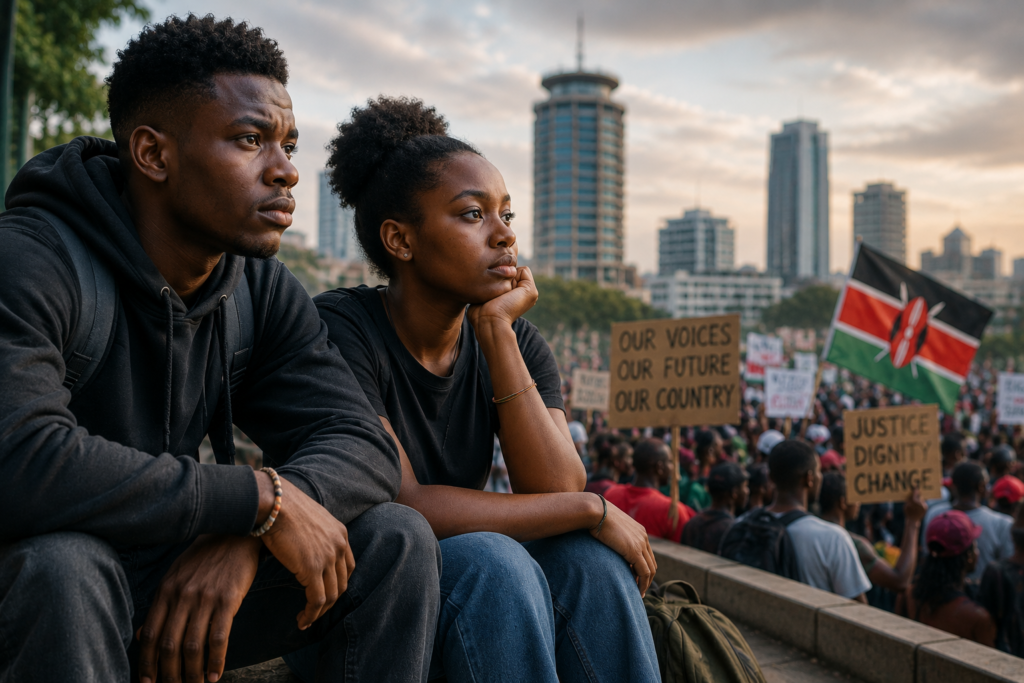
After a difficult national event like the maandamano, many young people wonder, “Should I still be feeling this way?”
The answer is yes.
There is no “correct” emotional response to witnessing violence, loss, uncertainty, or social injustice.
Your feelings are shaped by what you experienced, what you saw online, and even what your friends and family have been talking about.
For example, if you attended a demonstration and had to run when tear gas was fired, you may still feel afraid whenever you hear loud noises.
Another person who only watched the events online may feel deeply saddened by the stories of families who lost loved ones.
Someone else may feel hopeful because they believe young people are creating change. Others may feel nothing at all, and that can be just as normal.
You may notice different emotions at different times:
- Angry because what happened feels unfair
- Sad for people whose lives were affected
- Confused by different opinions and information
- Hopeful that positive change is possible
- Numb because your mind feels overwhelmed
- Afraid about what could happen next
Your emotions are not a sign of weakness. They are your mind’s way of responding to an unusual and stressful situation.
Instead of judging how you feel, begin by accepting your emotions.
Once you understand them, it becomes much easier to manage them in healthy ways and protect your mental health.
You can also talk to a teen and young adult therapist to help you process these emotions or thoughts.
Learn more: Top Developmental Challenges in the Teenage Years (And Why They Happen)
Your Brain Was Never Designed for Constant Crisis
Your brain is built to protect you from danger, not to live in danger every day.
When something frightening happens, your brain quickly switches into survival mode to keep you safe.
This is helpful during a real emergency, but when stressful events continue for days or weeks, your brain may struggle to switch that alarm off.
That is why many young people still feel stressed even after returning to school, work, or their normal routines.
Your body may still believe there is danger nearby.
The following table shows how your brain may respond and which lead to noticable mental health signs:
| Survival Response | How It May Show Up as Mental Health Sign |
| Fight | Feeling angry or irritable, arguing more often, becoming impatient, snapping at family or friends, or experiencing headaches and muscle tension from constant stress. |
| Flight | Avoiding the CBD or crowded places, cancelling plans, staying indoors, constantly checking the news or social media, or keeping yourself busy to avoid thinking about what happened. |
| Freeze | Feeling emotionally numb, struggling to concentrate, finding it difficult to study or work, feeling mentally “stuck,” having trouble sleeping, or experiencing nightmares. |
| Fawn | Avoiding conflict, agreeing with everyone to keep the peace, hiding your true feelings, putting other people’s emotions before your own, or feeling emotionally drained from trying to please everyone. |
These are normal stress responses, not signs that something is wrong with you.
You may recognize yourself in one response, or you may move between several of them depending on the situation.
The important thing is to notice how your mind and body are responding so you can take steps to care for your mental health.
Your brain is trying to protect you, and it needs time, rest, and healthy support to recognize that you are safe again.
Are you doing these things to reset your brain? Talk to us, and we can guide you on the steps to take.
Watching Videos Repeatedly Can Keep Your Brain in Survival Mode

Many young people believe they need to watch every video, read every update, and follow every discussion to stay informed.
While staying informed is important, repeatedly watching graphic videos can unintentionally keep your brain trapped in a cycle of stress.
This is known as vicarious trauma or secondary traumatic stress; the emotional impact of being repeatedly exposed to another person’s traumatic experiences.
Imagine Kevin, a 20-year-old university student. Every morning he checks X before getting out of bed. During lunch he watches videos shared on TikTok. Before sleeping, he scrolls through Instagram reels showing the day’s events. Although he has never attended a demonstration, he begins feeling anxious whenever he hears helicopters overhead. His heart races each time his phone vibrates with a news notification. His brain has learned to expect danger because it is constantly consuming distressing content.
Psychologist Dr. Bruce Perry, author of What Happened to You?, explains that our brains change according to what they experience repeatedly.
The more often we expose ourselves to frightening images, the easier it becomes for our brain to stay on high alert.
This does not mean you should ignore what is happening in your country. It means you should consume information wisely.
To protect your mental wellbeing while staying informed:
- Set specific times to catch up on the news instead of checking your phone all day.
- Avoid watching graphic videos repeatedly.
- Follow reliable news sources instead of accounts that constantly share disturbing content.
- Take breaks from social media to allow your brain to recover.
- Replace endless scrolling with activities that help you feel calm, such as exercise, spending time with family, reading, or prayer if that is part of your faith.
Protecting your mind does not mean you care less about your country. It simply means you are caring for your own wellbeing so you can continue living, learning, and contributing in healthy ways.
Explore: The Kenyan Modern Teenager: Challenges and Solutions
Five Healthy Ways to Process What Happened

Healing does not happen overnight, and there is no quick fix for the emotions that follow difficult national events.
However, there are healthy habits that can help your mind and body recover over time.
Healing is not about pretending nothing happened but about learning how to move forward without allowing the experience to control your life. Here are five techniques you can start practising today:
- Talk to someone you trust: Sharing your thoughts with a trusted friend, parent, mentor, teacher, or pastor can help you make sense of your emotions.
- Write down your thoughts: Journaling helps organise your thoughts and gives your emotions a safe place to be expressed.
- Take intentional breaks from social media: Staying informed is important, but constantly consuming distressing videos and news updates can keep your brain in survival mode.
- Return to healthy routines: Your brain feels safer when life becomes predictable again.
- Lean on your support system and your faith. Spend time with people who make you feel safe, understood, and encouraged.
- Pray regularly for Kenya: Take time to pray, read Scripture, and bring your fears, anger, and questions to God. Prayer may not immediately change your circumstances, but it can bring comfort, hope, and peace during uncertain times.
Sometimes these strategies are not enough, and that is okay.
If you find that your fear, sadness, anger, or anxiety continues for several weeks or begins interfering with your studies, work, relationships, or daily life, consider speaking with a mental health professional.
At Parent Teen Kenya, we are committed to helping young people, parents, schools, churches, universities, and organisations build emotional resilience during challenging times.
Through professional counselling, psychological support, mental health training, and trauma-informed workshops, we equip individuals and communities with practical tools to cope, heal, and grow. Call us today and book a session with us.

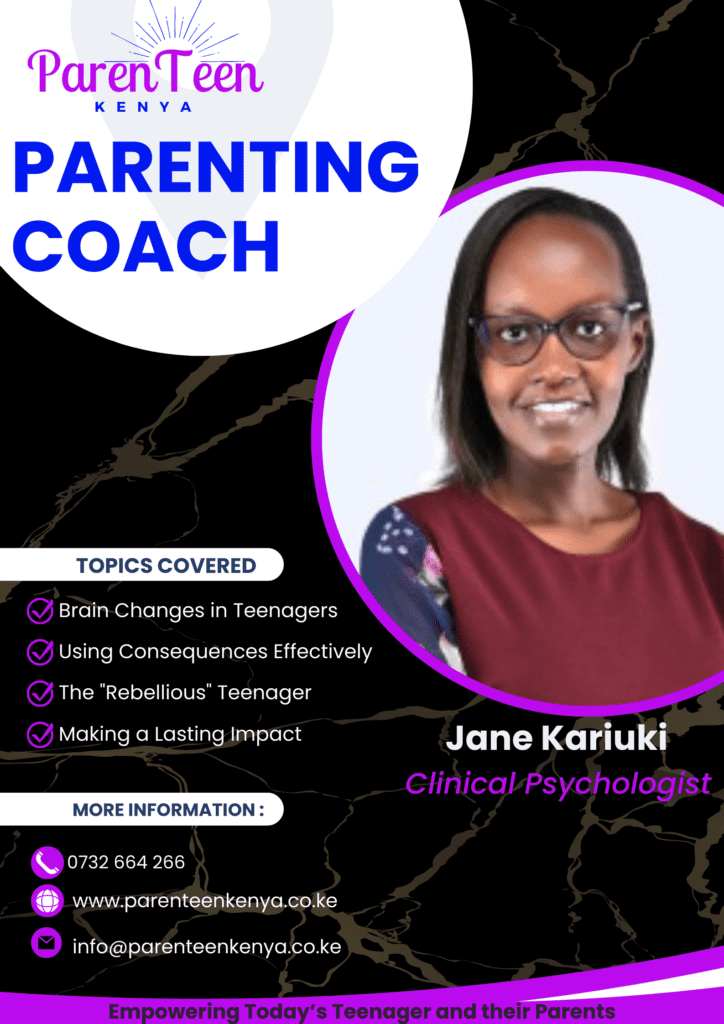
Jane Kariuki is a devout Christian, Clinician, Clinical Psychologist, and founder of ParenTeen Kenya. She authored an exceptional training manual used in her teens’ workshop and an instructional guidebook for her parenting classes. If she is not training, blogging, or counseling, Jane loves to spend time with her sweet husband and three children.